Deckover Trailer Guide: When You Need the Extra Width
A deckover puts the deck above the wheels instead of between them — giving you a full 102-inch-wide load surface. Here's when that matters.
Juan Santa
Commercial & Specialty Trailer Specialist
Buying the wrong trailer is an expensive mistake. The most common one we see: a buyer picks a trailer based on price or looks, then discovers it exceeds their tow vehicle's capacity, or that the deck length doesn't fit their longest piece of equipment.
Start with payload. Add up the heaviest load you'll ever carry — not your average load, your worst-case load. Then add 15% buffer. That's your minimum GVWR target.
Axle count follows from payload. Single-axle trailers are lighter and easier to maneuver but top out around 7,000 lbs GVWR. Tandem axles give you more capacity, better braking, and stability at highway speeds. Triple axles are for heavy equipment and specialty applications.
Hitch class is non-negotiable. A Class III receiver handles up to 8,000 lbs. Class IV gets you to 10,000 lbs. Anything above that needs a Class V or a gooseneck/fifth-wheel setup. Mismatching hitch class to trailer GVWR is a safety issue, not just a performance one.
Finally, verify your tow vehicle's actual tow rating — not the marketing number, the number in the owner's manual for your specific cab, bed, and drivetrain configuration. Trucks of the same model year can have wildly different tow ratings depending on how they were optioned.
buying guidepayloadtow vehicleaxles
The question comes up constantly: should I buy a dump trailer or a flatbed? The honest answer is that they solve different problems, and the wrong choice will cost you time on every job.
Dump trailers are built for bulk material — gravel, mulch, demolition debris, dirt, sand. The hydraulic lift means one person can unload a full trailer in under two minutes without any equipment. If you're in landscaping, excavation, or construction cleanup, a dump trailer pays for itself fast.
Flatbeds are built for equipment and oversized loads. No sides, no floor restrictions, and you can load from any angle. If you're hauling skid steers, mini excavators, forklifts, or large fabricated steel, a flatbed gives you the flexibility a dump trailer can't.
The overlap zone is light construction materials — lumber, pipe, palletized goods. Either trailer can handle it, but a flatbed is usually faster to load and unload with a forklift, while a dump trailer is faster without one.
One more factor: CDL requirements. Most dump trailers and flatbeds under 26,001 lbs GVWR don't require a CDL in Florida. But if you're looking at a heavy-spec tandem dump or a 40-foot gooseneck flatbed, verify your combined weight before you buy.
dump trailerflatbedcomparisonconstruction
Commercial trailer financing is different from a car loan. Lenders treat trailers as business equipment, which means they're evaluating you as a business owner, not just as a borrower.
Time in business is often the first filter. Many lenders want to see at least 12 months of operating history. Startups aren't automatically disqualified, but they'll face a smaller pool of lenders and may need a larger down payment.
Credit profile matters, but it's not the whole story. A strong business credit profile can offset a weaker personal score. If you've been building business credit — net-30 accounts, a business credit card, on-time vendor payments — that history counts.
Down payment affects your rate and your approval odds. Ten to twenty percent down is typical for commercial equipment. A larger down payment reduces lender risk and often unlocks better terms.
The trailer itself is collateral. Lenders look at the trailer's resale value relative to the loan amount. A well-spec'd, in-demand trailer (tandem dump, enclosed cargo, refrigerated) is easier to finance than a highly customized specialty unit with a narrow resale market.
financingcreditbusiness equipmentlenders
Open trailers cost less upfront. That's true. But the total cost of ownership calculation is more complicated than the sticker price.
Weather exposure is the biggest hidden cost of an open trailer. If you're hauling tools, electronics, finished goods, or anything that can't get wet, you're either covering every load or accepting damage risk. Tarps take time and don't always seal.
Theft is a real factor for contractors. An enclosed trailer with a quality lock is significantly harder to steal from than an open trailer. If you're leaving a loaded trailer overnight at a job site, that matters.
Enclosed trailers also double as mobile storage. Many contractors use them as rolling tool rooms — everything stays organized, locked, and ready to go. That eliminates daily loading and unloading time, which adds up fast over a year.
The break-even point depends on your use case. If you're hauling bulk material or equipment that doesn't care about weather, an open trailer is the right call. If you're hauling anything with value, sensitivity to weather, or theft risk, run the numbers on enclosed before you decide on price alone.
enclosed trailercargobuying guidecost
Most trailer problems that cause roadside breakdowns are preventable with a five-minute pre-trip inspection. The issue is that most people skip it until something goes wrong.
Tires first. Check pressure and look for uneven wear, cracks in the sidewall, or objects embedded in the tread. Trailer tires are often underinflated because nobody checks them — and underinflated tires overheat at highway speeds.
Lights and electrical. Plug in and walk the trailer — brake lights, turn signals, running lights, and reverse lights. A burned-out brake light is a DOT violation and a rear-end collision waiting to happen.
Hitch and safety chains. Confirm the coupler is fully seated and locked. Safety chains should be crossed under the tongue and have enough slack to turn but not drag. Check the breakaway cable is connected to the tow vehicle.
Brakes and wheel bearings. If your trailer has electric brakes, test the brake controller before you leave. Listen for grinding or feel for pulling when you brake — that's a wheel bearing or brake issue that won't get better on the road.
Load security. Every load should be secured with straps or chains rated for the weight. Check that nothing has shifted from the last haul. Unsecured loads are a liability issue and a criminal charge in Florida if debris causes an accident.
maintenancesafetyDOTpre-trip inspection
The word 'turnkey' gets used loosely in equipment sales. Here's what it actually means when we put together a package for a client.
It starts with the business model, not the trailer. Before we spec anything, we want to understand what you're doing, how many jobs per week, what your typical load looks like, and what your tow vehicle situation is. The trailer spec follows from that — not the other way around.
Equipment configuration is where most of the value is. A food trailer needs a specific layout, ventilation, and power setup. A mobile pressure washing rig needs tank capacity, pump specs, and reel placement. Getting this wrong means retrofitting later, which costs more than getting it right the first time.
Financing is part of the package. We work with lenders who understand equipment financing for new businesses and established operators. We can often structure the deal so your monthly payment is covered by two or three jobs.
The goal is that you take delivery of something you can put to work the same week. Not something you need to modify, add to, or figure out. That's what turnkey actually means.
turnkeybusiness packagesstartupfood trailer
Payload is the single most important number in trailer selection, and it's the one most buyers get wrong. Here's the correct way to calculate it before you buy.
Start with GVWR — Gross Vehicle Weight Rating. This is the maximum total weight the trailer is rated to carry, including its own empty weight. It's stamped on the VIN plate on every trailer. This is the manufacturer's hard limit.
Subtract the trailer's empty weight (also called curb weight or tare weight) from the GVWR. The result is your usable payload capacity. A 14,000 lb GVWR trailer that weighs 4,200 lbs empty gives you 9,800 lbs of actual cargo capacity.
Now calculate your actual load. Weigh your heaviest expected load — or estimate conservatively. Add the weight of any equipment you carry on the trailer (toolboxes, ramps, tie-down hardware). That's your working payload requirement.
The rule of thumb: your working payload should not exceed 85% of the trailer's rated payload capacity. That 15% buffer accounts for load shifts, uneven distribution, and the fact that real-world loads rarely match the estimate.
One more step: verify your tow vehicle's payload capacity from the door sticker — not the brochure. The tongue weight from the trailer (typically 10–15% of trailer GVWR for bumper pull) counts against your truck's payload. Both limits must be respected simultaneously.
payloadGVWRbuying guidetow vehicle
Hotshot trucking is one of the fastest-growing segments in freight — and one of the most misunderstood when it comes to CDL requirements. Here's what you actually need to know before you build your rig.
The federal CDL threshold is straightforward: if the Gross Combined Weight Rating (GCWR) of your truck plus trailer exceeds 26,001 lbs, and the trailer GVWR exceeds 10,001 lbs, you need a CDL Class A. Stay under both thresholds and you're operating non-CDL.
A typical non-CDL hotshot setup pairs a one-ton dually (F-350, Ram 3500, Silverado 3500) with a bumper-pull or gooseneck flatbed trailer rated at 14,000–16,000 lbs GVWR. The truck's GCWR is typically 23,000–25,000 lbs depending on configuration — keeping the combination under the federal threshold.
Payload is the limiting factor, not the CDL threshold. A 16,000 lb GVWR trailer that weighs 3,800 lbs empty gives you 12,200 lbs of cargo capacity. That's enough for most equipment loads — mini excavators, skid steers, UTVs, and light construction equipment.
State rules vary. Some states have lower thresholds or additional requirements for commercial use. If you're operating across state lines, verify the rules for each state in your operating area. Juan can walk through your specific combination and confirm what applies.
The non-CDL advantage is real: no CDL testing, no medical card requirement, no logbook for most short-haul operations. But the weight limits are firm. Exceeding them — even occasionally — creates liability exposure that isn't worth the risk.
hotshotCDLnon-CDLGCWRflatbed
The 14,000 lb and 16,000 lb GVWR dump trailers are the two most common configurations for contractors, landscapers, and junk removal operators. The 2,000 lb difference sounds small — but it changes several things about how you operate.
Payload difference: a 14K trailer typically weighs 3,400–3,800 lbs empty, giving you 10,200–10,600 lbs of cargo capacity. A 16K trailer weighs 4,000–4,400 lbs empty, giving you 11,600–12,000 lbs. The heavier frame and axles of the 16K unit eat into the payload advantage.
Tow vehicle requirements: a 14K dump can typically be pulled by a properly equipped one-ton dually (F-350, Ram 3500, Silverado 3500). A 16K dump pushes the limits of a one-ton and often requires a medium-duty truck (F-450, F-550, Ram 4500/5500) for safe operation at full load.
CDL implications: a 16K trailer paired with a one-ton truck can push the GCWR close to or above 26,001 lbs depending on the truck's configuration. If you're near that threshold, verify your specific combination before you buy — a CDL requirement changes your operating model significantly.
The practical answer for most contractors: if your heaviest load is under 9,000 lbs and you're running a one-ton truck, a 14K dump is the right call. If you're regularly hauling 10,000+ lbs or want headroom for growth, the 16K makes sense — but confirm your tow vehicle can handle it first.
dump trailerGVWR14K16Kcomparison
Equipment trailers and tilt trailers both move heavy equipment — but they load differently, and the difference matters when you're doing it multiple times a day.
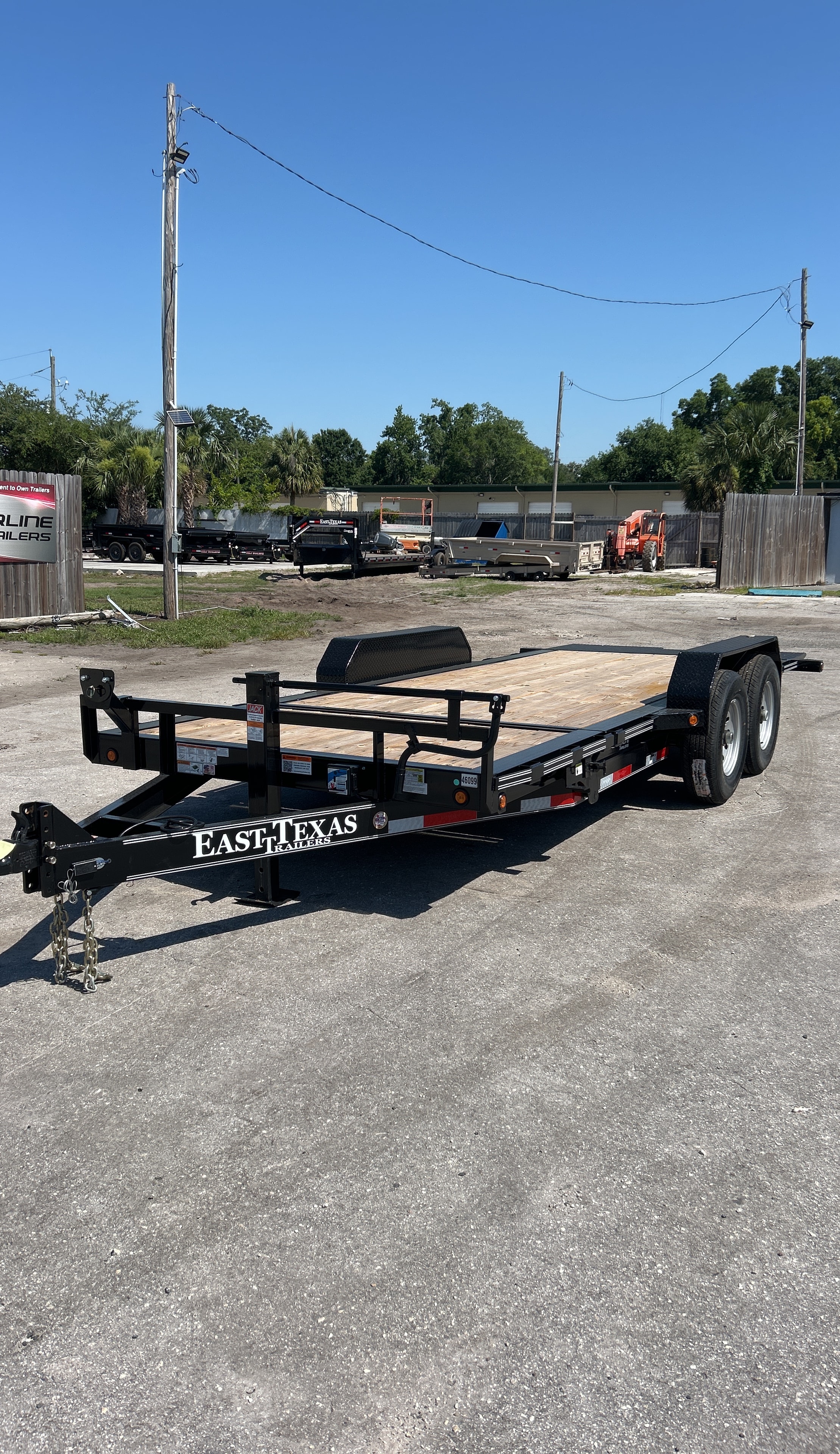
Standard equipment trailers use ramps. Ramps are versatile — they work for anything with wheels or tracks that can drive or be driven onto the deck. The limitation is ramp angle: low-clearance equipment (skid steers with attachments, compact excavators) can hang up on steep ramps, especially on uneven ground.
Tilt trailers eliminate the ramp entirely. The deck tilts to the ground, the equipment drives on, and the deck returns to level. For low-clearance equipment, this is a significant advantage — no ramp angle to clear, no ground contact risk. Loading is faster and requires less maneuvering.
The tradeoff: tilt trailers are heavier than equivalent ramp trailers, which reduces payload. The tilt mechanism adds weight and complexity — more to maintain, more that can fail. And tilt trailers require level ground to load safely; a sloped surface can cause the deck to tilt unevenly.
For most contractors hauling a single piece of equipment repeatedly, a tilt trailer saves time and reduces loading stress. For operators hauling varied loads — sometimes equipment, sometimes materials — a ramp trailer's versatility wins. Juan can walk through your specific use case and help you decide.
equipment trailertilt trailercomparisonloading
Choosing the right truck for your trailer is as important as choosing the right trailer. Here's a practical breakdown of the truck classes most trailer buyers are working with.
F-350 / Ram 3500 / Silverado 3500 (one-ton): The workhorse of the trailer world. Properly configured, a one-ton dually can tow 20,000–22,000 lbs and carry 3,500–4,200 lbs of payload. Suitable for 14K–16K GVWR trailers at moderate loads. Verify your specific truck's door sticker — configurations vary significantly.
F-450 / Ram 4500 (medium-duty): A significant step up. The F-450 is rated for up to 37,000 lbs towing (gooseneck) and 4,200–5,000 lbs payload depending on configuration. This is the right truck for 16K–20K GVWR trailers at full load, and for operators who regularly push the limits of a one-ton.
F-550 / Ram 5500 (super-duty): Built for commercial applications. Tow ratings up to 40,000 lbs, payload up to 7,000+ lbs. This is the platform for heavy gooseneck and fifth-wheel trailers, multi-car haulers, and commercial hotshot operations. CDL requirements depend on GCWR and state.
The key number to check on any truck: the payload sticker on the driver's door jamb. That number — not the brochure, not the marketing spec — is what the truck is actually rated to carry. Tongue weight from the trailer counts against that number. Juan reviews every truck-trailer combination before purchase.
truck guidetow vehicleF-350F-450F-550payload
Axle configuration is one of the most consequential decisions in trailer selection — and one of the least understood. Here's what each configuration actually means for your operation.
Single axle: one axle, typically rated at 3,500–7,000 lbs. Lighter, easier to maneuver, lower tire costs. The right choice for utility trailers, light cargo, and applications where the load stays well under 7,000 lbs. The limitation is stability at highway speeds with heavy loads — a single axle trailer can sway more than a tandem.
Tandem axle: two axles, typically rated at 7,000–21,000 lbs combined. Better stability, better braking, better load distribution. The standard configuration for dump trailers, equipment trailers, and most commercial applications. The tradeoff is weight — a tandem trailer is heavier than a single, which reduces payload.
Triple axle: three axles, typically rated at 21,000 lbs and above. Used for heavy equipment, specialty trailers, and applications requiring maximum load distribution. The additional axle reduces tire wear per axle and improves stability under heavy loads. Requires more tire maintenance and is harder to maneuver in tight spaces.
Axle spacing matters too. Closer-spaced axles (less than 40 inches apart) are classified differently for bridge law purposes in some states — which affects legal load limits on certain roads. If you're operating commercially across state lines, verify the axle spacing requirements for your route.
axlessingle axletandemtriple axlebuying guide
Every dump trailer has a hydraulic hoist that lifts the bed. The two main configurations — scissor hoist and cylinder (telescoping) hoist — work differently and suit different applications.
Scissor hoist: uses a scissor-jack mechanism mounted under the trailer bed. The scissor design provides consistent lifting force throughout the full range of motion and keeps the center of gravity lower during the dump cycle. This makes scissor hoists more stable on uneven ground and better suited for heavy, dense loads like gravel and concrete.
Cylinder hoist (telescoping): uses one or more hydraulic cylinders that extend vertically to lift the bed. Simpler mechanism, fewer moving parts, easier to maintain. The limitation is that lifting force decreases as the cylinder extends — meaning the hoist works hardest at the beginning of the lift, when the load is heaviest.
For most contractors hauling dirt, gravel, mulch, and demolition debris, either hoist type works well. The scissor hoist is generally preferred for heavy, dense loads and for operators who dump frequently on uneven terrain. The cylinder hoist is a solid choice for lighter loads and operators who prioritize simplicity and lower maintenance.
Maintenance matters more than hoist type for long-term reliability. Keep hydraulic fluid clean and at the correct level, inspect cylinder seals annually, and grease all pivot points on a scissor hoist. A well-maintained cylinder hoist will outlast a neglected scissor hoist every time.
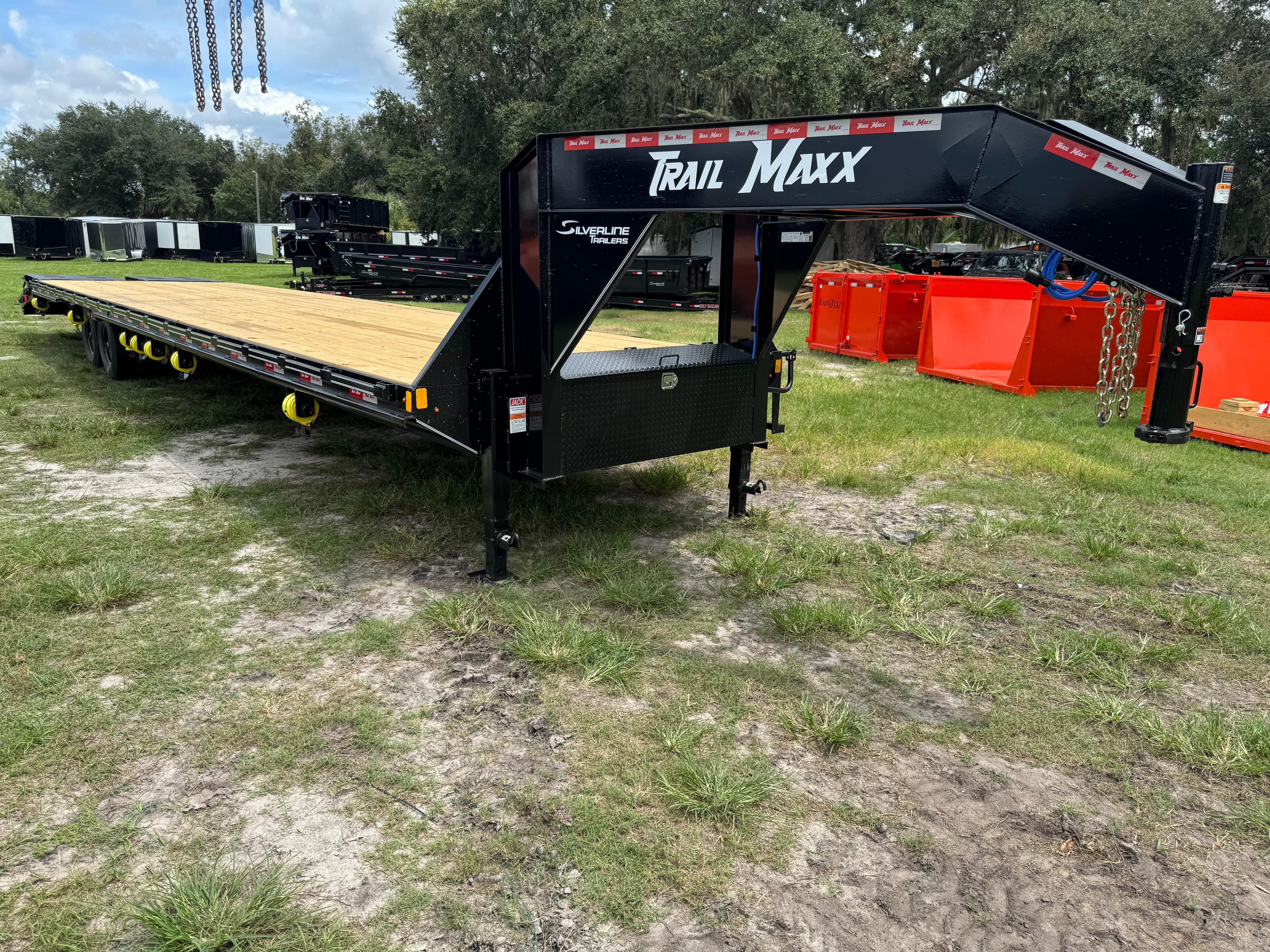
A deckover trailer is built with the deck sitting above the wheel wells rather than between them. The result is a flat, unobstructed deck surface that runs the full width of the trailer — typically 96 to 102 inches.
The width advantage is the primary reason to choose a deckover. Standard equipment trailers have wheel wells that intrude into the deck, limiting usable width to 82–84 inches between the fenders. A deckover gives you the full 96–102 inches — enough for wide equipment, side-by-side loads, and oversized machinery.
The tradeoff is deck height. Because the deck sits above the axles, it's higher off the ground than a standard equipment trailer. Loading low-clearance equipment requires longer ramps or a loading dock. For equipment with good ground clearance, this isn't an issue. For low-slung machinery, it can be.
Deckover trailers are the standard platform for hotshot carriers hauling wide loads — construction equipment, agricultural machinery, and oversized industrial components. The full-width deck also makes them useful for side-by-side loading of two smaller pieces of equipment.
Gooseneck deckover configurations are common in commercial hotshot. The gooseneck hitch provides better weight distribution and higher tow ratings than bumper pull, and the deckover deck gives you the full width for wide loads. Juan can walk through the right configuration for your specific application.
deckoverhotshotflatbedwide loadgooseneck
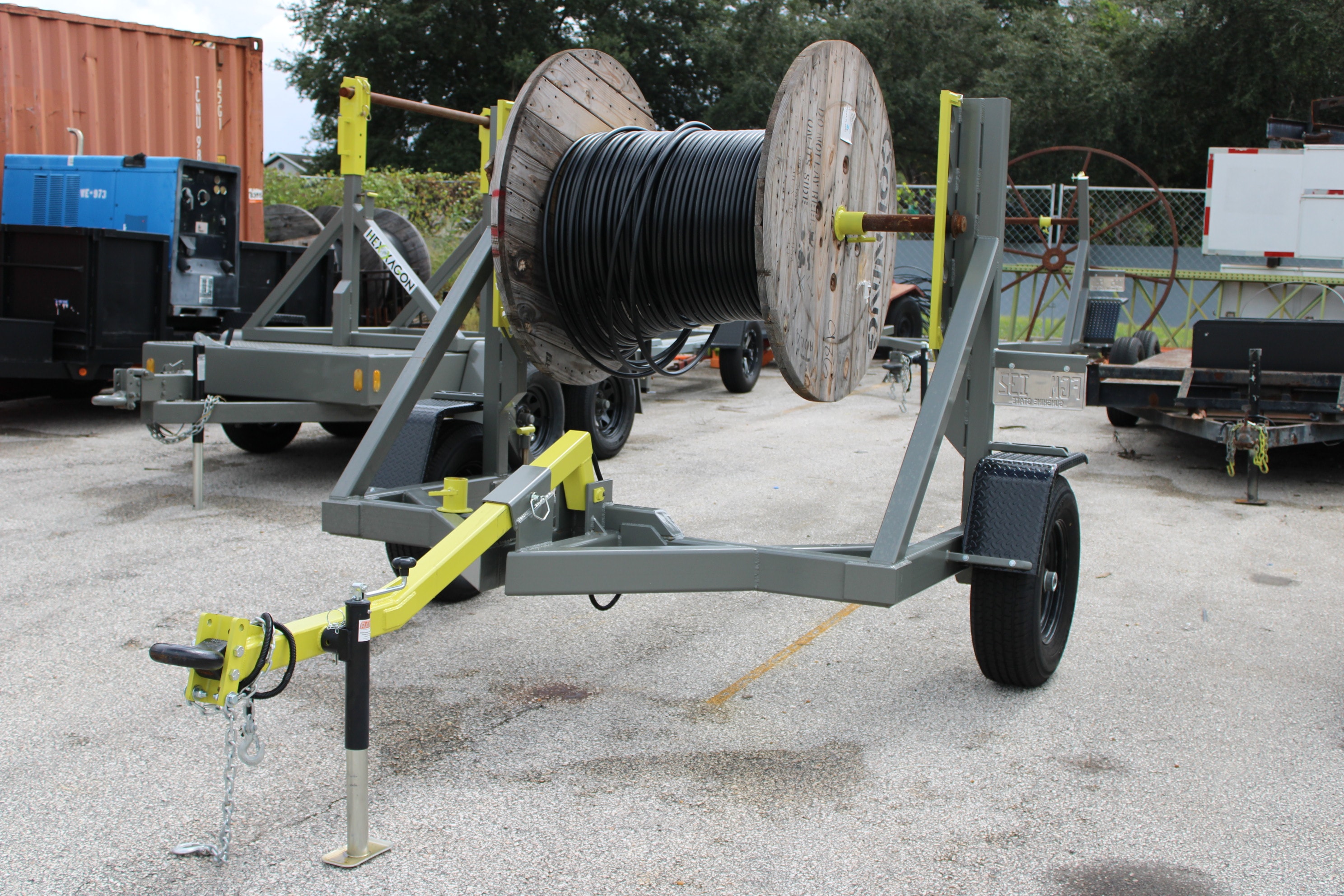
Reel trailers are specialized equipment — built to transport, support, and deploy large cable and fiber reels in the field. If you're running a telecom or utility crew, the right reel trailer configuration can significantly reduce setup time and crew fatigue on every job.
The core spec is reel capacity: diameter and weight. Fiber and coax reels range from 36 inches to 96 inches in diameter and from a few hundred pounds to several thousand. Your trailer needs to accommodate the largest reel you'll ever run — not your average reel.
Axle rating follows from reel weight. A fully loaded reel trailer can easily exceed 10,000 lbs. Verify the trailer's GVWR against your heaviest expected load, including the trailer's own weight. Undersized axles are a safety issue and a maintenance problem.
Reel chock and tie-down systems vary by manufacturer. Look for adjustable chocks that can accommodate different reel diameters, and verify the tie-down points are rated for the load. A reel that shifts in transit can damage the cable and create a serious road hazard.
Single vs. multi-reel configurations: single-reel trailers are simpler and easier to load. Multi-reel trailers allow you to carry multiple reels to a job site, which reduces trips but increases loading complexity. The right choice depends on your job size and crew workflow.
Reel trailers are sourced to order through the Silverline network. Availability and lead times vary. Contact Juan with your reel diameter range, weight requirements, and deployment method — he'll source the right configuration for your crew.
reel trailertelecomfiberutilityspecialty
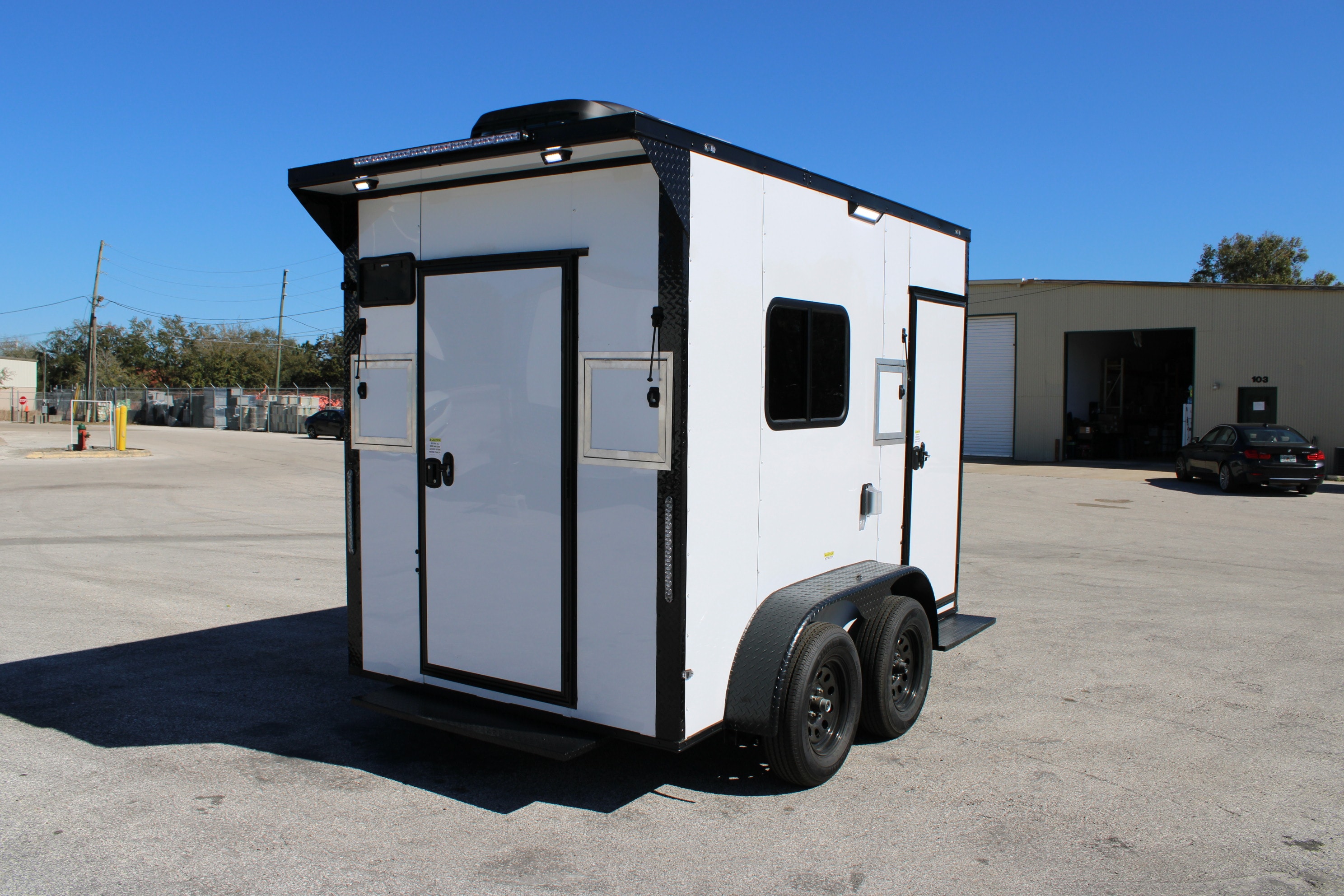
A splicing trailer is not a storage trailer with a generator. It's a purpose-built mobile workstation designed for fiber optic splicing, OTDR testing, and cable management in the field. Getting the spec right matters for crew productivity and equipment protection.
Climate control is non-negotiable. Fiber splicing requires a clean, temperature-controlled environment. Dust, humidity, and temperature extremes affect splice quality and equipment reliability. A properly spec'd splicing trailer has a rooftop HVAC unit — typically 13,500 BTU — with both cooling and heating capability.
Generator sizing depends on your equipment load. A basic splicing setup with a fusion splicer, OTDR, laptop, and HVAC needs at least 6.5 kW. Larger crews with multiple workstations and additional test equipment may need 10–15 kW. Cummins diesel generators are the standard for reliability in field conditions.
Workstation layout affects crew efficiency. Dual side-bench configurations allow two technicians to work simultaneously. Cable pass-throughs and conduit routing need to be positioned for your typical job setup — not just wherever they fit. These details are worth specifying before the trailer is built.
Tow vehicle requirements: a fully equipped splicing trailer can weigh 8,000–12,000 lbs. Verify your tow vehicle's GVWR and payload capacity before sourcing. A one-ton truck handles most configurations; larger trailers may require a medium-duty platform.
Splicing trailers are sourced and configured to order through the Silverline network. Lead times vary. Contact Juan with your crew size, equipment list, and job type — he'll source the right configuration and walk through the spec before anything is ordered.
Financing and rent-to-own are not the same thing — and choosing the wrong one for your situation can cost you significantly over the life of the trailer. Here's how to think through the decision.
Traditional financing: you borrow money to buy the trailer, make fixed monthly payments, and own the trailer outright at payoff. Interest rates and terms depend on your credit profile, time in business, and the lender. This is the lowest total cost path for buyers who qualify.
Rent-to-own: you rent the trailer with an option to purchase. Payments are typically higher than a financed equivalent, but the qualification process is different — some RTO providers use alternative verification methods that don't rely solely on credit scores. For buyers who don't qualify for traditional financing, RTO provides a path to ownership.
The cost difference is real. RTO total cost of ownership is typically higher than financed total cost for the same trailer. The premium is the cost of the alternative qualification path. If you can qualify for traditional financing, it's almost always the better financial choice.
RTO availability is limited to 21 confirmed states through Hometowne, Hopkins, and C3. Not all trailer types qualify. Specialty and roll-off trailers are not automatically RTO eligible. If your state isn't on the confirmed list, RTO isn't available to you.
Juan reviews your situation before routing you to any program. No lender or RTO application is submitted without a conversation first. The goal is to match you to the right program — not the most convenient one for us.
financingRTOrent-to-owncomparisoncredit
The door sticker on your truck's driver-side door jamb is the most important document in the truck-trailer matching process. It tells you what your specific truck — not the model, your truck — is actually rated to carry.
Find the GVWR (Gross Vehicle Weight Rating) on the sticker. This is the maximum total weight of the truck including passengers, cargo, and tongue weight from the trailer. It's the hard limit for the truck itself.
Find the GAWR (Gross Axle Weight Rating) for front and rear axles. These tell you how much weight each axle can carry. Tongue weight from the trailer loads the rear axle — if you're near the rear GAWR with a loaded truck bed, adding tongue weight can push you over the limit.
Calculate payload capacity: GVWR minus the truck's curb weight (also on the sticker or in the owner's manual). The result is how much weight you can add to the truck — including passengers, bed cargo, and trailer tongue weight. This is the number that matters most for trailer selection.
The brochure tow rating is a maximum under ideal conditions with a specific configuration. Your door sticker payload is your actual limit for your specific truck. These numbers are often very different. A truck marketed as a '14,000 lb tow rating' may have a door sticker payload of 1,800 lbs — which limits tongue weight to 180–270 lbs, far less than most trailers require.
Send Juan a photo of your door sticker before you buy any trailer. He'll read the actual numbers and confirm what trailer configurations your truck can safely and legally handle. This review is free with every trailer purchase.
door stickerpayloadGVWRtow vehiclebuying guide
Questions?
Talk to Juan Before You Buy
Juan reviews every truck-trailer combination before purchase. Send him your tow vehicle info, your load requirements, and your ZIP code — he'll confirm what configuration makes sense.